Giving Story: Betty Knox

CT Council for Philanthropy

When it comes to carousels, we’re all kids, and downtown Hartford has one of these symbols of
youth and merriment because Betty Knox, a former member of the City Council, walked into her
lawyer’s office one day and said, “I want to do something for the city of Hartford.”
With the help of her attorney, she set up a foundation in July 1966, just months before her
untimely death. The purpose was to beautify Greater Hartford, and how this was to happen she
left to a board of creative advisors. Through her bequest, playgrounds and gardens blossomed in
the city; magicians and clowns strolled downtown streets; and the Peace Train concerts
entertained summer crowds. Today, her legacy includes a harvest of trees and plants, and
financial support for young people who learn to love beauty by helping it grow.

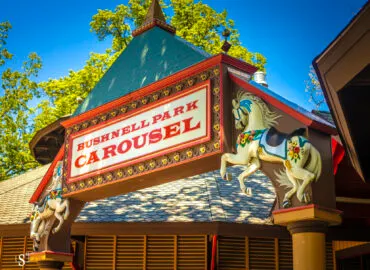
But the carousel is her most visible single bequest. It fills one corner of Bushnell Park, an
essential piece of the urban scene. It would not be there were it not for the generosity of one
committed and generous woman.

“I want to do something for the city of Hartford”- Betty Knox

Remembering Betty Knox

Betty Knox probably would be pleased with the accomplishments of the two foundations that
bear her name and do good works for Hartford. The six-term city councilwoman died in 1966.
But her energetic, forward-looking commitment to Hartford lives on. All those who live or work
in the city have reason to celebrate what would have been her 85th birthday last week.

Lucky enough to have a fortune, Ms. Knox left about $2.5 million in her will for a charitable
foundation, which after 10 years was split into the original Knox Parks Foundation and the Knox
Downtown Foundation. It seemed that even after her death the many interests she had in life
could not be contained in one foundation. She was active in the League of Women Voters and
fought for zoning protection in residential areas, urban renewal, city playgrounds and concerts in
the parks. During World War II, she opened a day-care center for working mothers, an idea that
has particular resonance today.
Ms. Knox’s concerns are as critical to the health of Hartford now as they were nearly 30 years
ago. A city that allows itself to become dowdy or less pleasant for living, working and playing
loses its vitality. Ms. Knox tried to bring beauty to public housing projects and city parks. The
Knox Parks Foundation now runs 16 community gardens around the city.
In 1974, the foundation purchased the Bushnell Park carousel, which gives delightful definition
to a corner of the park. The Knox Parks Foundation runs a plant-growing program for Hartford
schoolchildren that is a national model. Given the state of school finances, such a program might
not exist otherwise.
Ms. Knox’s legacy is an example of civic pride that should inspire others

Friends Remember How Knox Helped City

October 31, 1996 | By JOHNNY MASON JR.; Courant Correspondent
____________________________________________________________________________________

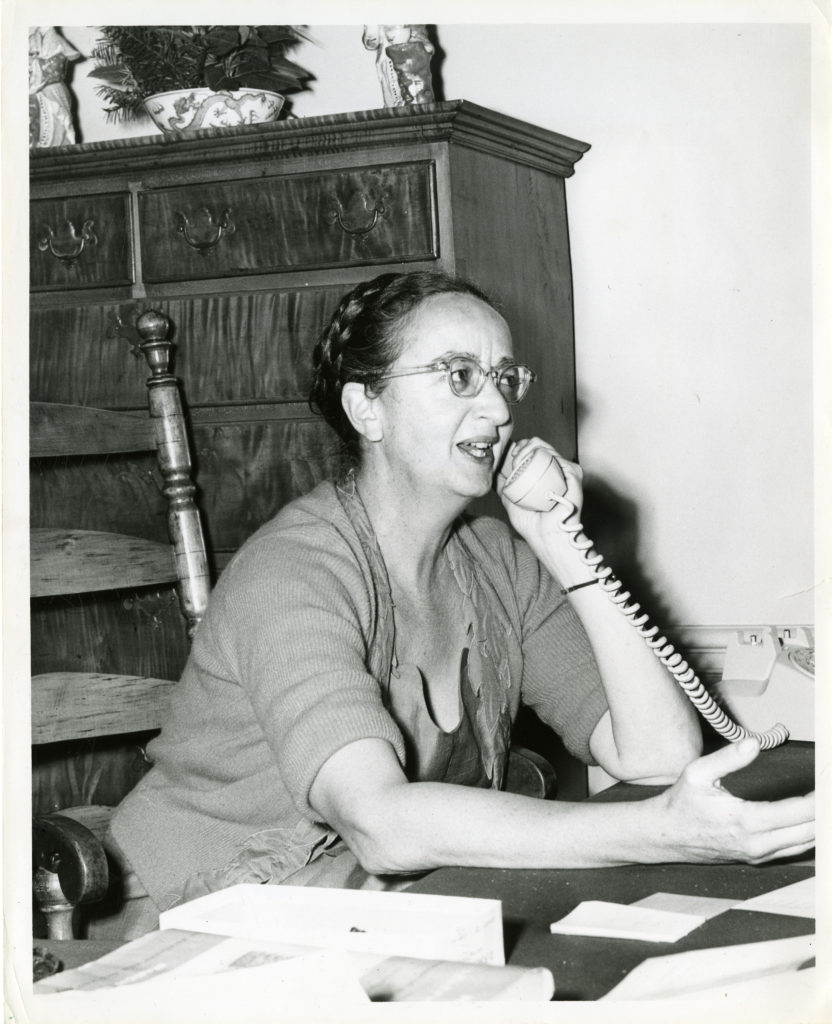
Her friends describe Elizabeth L. Knox as an honest, dedicated woman who loved Hartford.

Although she died 30 years ago after suffering a heart attack while preparing lunch for friends, the memories of Betty Knox and the impact of her good works live on.

Promoting education, beautification, gardening, and service to children and the community—that was Knox’s vision, said Mary Christensen, program coordinator for the Knox Parks Foundation, based at Elizabeth Park. A celebration in Hartford City Hall’s atrium will mark both the 30th anniversary of the foundation and the 89th anniversary of Knox’s birth.

Knox was born in Hartford on November 1, 1908, the daughter of Robert C. Knox and Estelle Lethridge Knox. Her father founded the R.C. Knox Co., Inc., an insurance agency.

She graduated from Hartford public schools, Miss Wheeler’s School in Providence, Rhode Island, and the Yale University School of Drama.

Active in civic and political affairs, Knox served six terms on the Hartford City Council, where she supported urban renewal initiatives, city playgrounds, and concerts in Elizabeth Park.

“The city meant a lot to her. Her resources gave her the opportunity to be active in politics and influential in the community,” Christensen said.

During World War II, Knox opened a daycare center in Charter Oak Terrace. That experience sparked her interest in city affairs and led her to join the Hartford League of Women Voters, where she later served as president.

“She loved kids. She didn’t have any of her own, so she put a lot of effort into helping others,” said Mary Edwards, 83, a longtime friend.

“But she had no regrets about not having children,” Edwards added. “Betty wasn’t one to say, ‘If only I did this’ or ‘I should have done that.’ She did things.”

Several months before Knox’s sudden death at age 57, she asked Edwards to serve as vice president of the newly formed Knox Parks Foundation.

When Knox died in 1966, she left approximately $7 million in her will to establish a charitable foundation. Ten years later, that organization was divided into the Knox Parks Foundation and the Knox Foundation, Christensen said.

The Knox Foundation provides grants to a variety of organizations, including the parks foundation. The Knox Parks Foundation administers numerous programs, including teacher training for indoor gardening projects in city schools, community gardens, and summer youth initiatives for Hartford residents.

Knox’s generosity helped establish the Betty Knox Apartments across from St. Francis Hospital and Medical Center, preserve the Bushnell Park Carousel—which her foundation purchased in 1974—and create 20 community gardens throughout Hartford.

“She just had more energy and more ideas than anyone I knew,” Edwards said.

Jack Riege, 74, a retired Hartford attorney who helped Knox establish her foundation, said she spent many hours in his law office discussing her love for Hartford.

“She had the foresight to set this whole thing up,” said Riege, who served on the Knox Foundation board. “This was wonderful for Hartford.”

Riege did not believe Knox had any premonition of her death, but he said that while she often had a sense of humor, she was deeply serious when discussing plans to improve the city.

He recalled Knox looking out the window of his 15th-floor office at Constitution Plaza toward Interstate 91, wondering how she could help beautify Hartford.

“She talked about giving people something that would excite them,” he said. “She wanted to give them something they could enjoy and be proud of.”

Tom Bodine, 81, who met Knox through political activities, helped her organize the Citizens Charter Committee in 1951. The nonpartisan organization endorsed candidates based more on merit than political party affiliation, Bodine said.

Knox later ran for office with the committee’s endorsement.

“Betty used to say there isn’t a Republican way to clean up the streets or a Democratic way to fix a problem—only a proper way,” Bodine said.

Knox, who never married, and Bodine often traveled to New York City to attend Broadway productions. They also shared a tradition of burying a bottle of champagne in a snowbank before attending performances at the Shubert Theater in New Haven. After the show, they would return to Hartford and enjoy the chilled champagne while overlooking the city.

“She was loved and respected by everyone who knew her,” Bodine said. “She represented goodness.”

Knox Still Helping

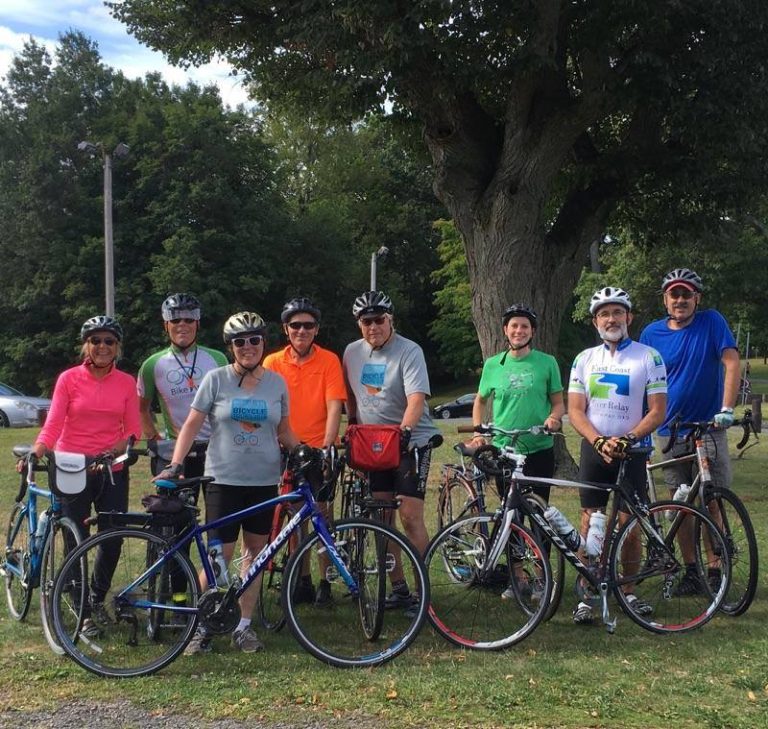
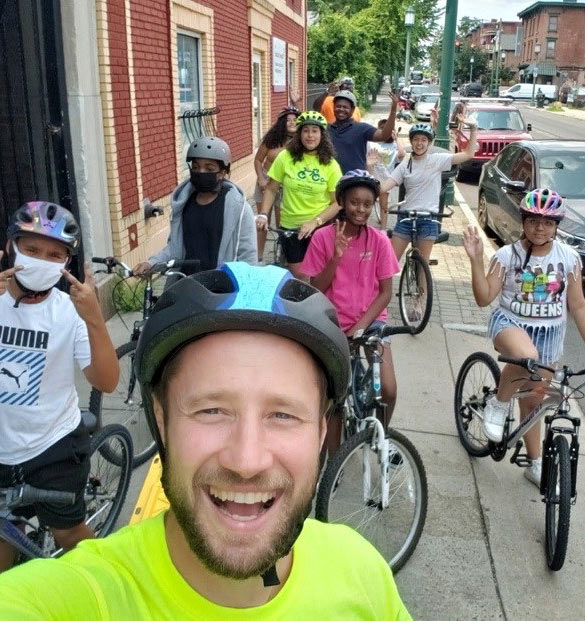
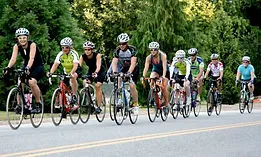
Last year, a group of newly arrived Hartford residents wanted to participate in the Discover Hartford Bicycling and Walking Tour but could not afford the registration fee. The organizers turned to the Knox Foundation for assistance.

The foundation quickly provided a grant that enabled 150 riders and walkers to join more than 1,200 others in what became a festive and successful community event.

For 40 years, community organizations have turned to the Knox Foundation for support, often when no other funding sources were available. The foundation has helped fund an extraordinary range of initiatives, including canoe trips, youth theater productions, music programs, fuel assistance, college preparation efforts, and even a book of poetry written by girls living in a shelter.

Founded in 1966, the Knox Foundation carries forward the vision of civic activist and philanthropist Betty Knox, who left the majority of her estate to support the beautification and revitalization of Hartford.

During the early 1970s, a period marked by limited investment in the city, the foundation committed approximately half of its assets to encourage downtown development. One of the most visible outcomes of that effort was the restoration of the Carousel in Bushnell Park. In 1977, the organization divided into two separate entities: the Knox Parks Foundation, which assumed responsibility for horticultural beautification projects, and the Knox Downtown Foundation—now known simply as the Knox Foundation—which focused on strengthening Hartford’s communities.

The Knox Foundation was recognized as the 2008 Outstanding Foundation by the Connecticut Chapter of the Association of Fundraising Professionals. This distinction is particularly noteworthy for a relatively small foundation whose annual grantmaking totals between $60,000 and $70,000.

Yet the foundation’s impact demonstrates that effective philanthropy is not solely a matter of scale. While large sums of money can be valuable, the Knox Foundation has consistently shown that strategically targeted investments can achieve remarkable results. Over the years, its dedicated and creative board members have avoided unnecessary bureaucracy, kept administrative costs low, and invested in projects that reflect Betty Knox’s original vision and values.

The foundation’s history offers a simple lesson: meaningful community change does not require the resources of a national institution. With thoughtful leadership, a clear mission, and a commitment to local needs, even a modest foundation can make a lasting difference.

Knox Still Helping

October 13, 1995 | By CONSTANCE NEYER; Courant Staff Writer

In 1991, Stephen B. Goddard visited a friend in University City, Missouri, and was impressed by the way the city recognized its residents. Sidewalks throughout the community were engraved with the names and accomplishments of notable citizens.

“It’s a big hit down there,” said Goddard, a member of the Hartford Public Library Board of Directors. “They have dozens and dozens of them.”

Goddard brought the idea back to Hartford, and on Thursday the Hartford Public Library unveiled its seventh and eighth commemorative granite blocks on the library patio, honoring attorney Solomon Elsner and Hartford City Councilwoman Elizabeth “Betty” Knox.

According to Goddard, the program recognizes two types of individuals: Hartford figures with national or international reputations, such as Mark Twain and Harriet Beecher Stowe, and those “who are near and dear to Hartford.” Thursday’s honorees, he said, belonged firmly in the latter category.

Solomon Elsner, who lived from 1883 to 1962, was what Goddard described as a “towering figure” in Hartford. A lifelong resident of the city, Elsner graduated from Hartford Public High School and Yale Law School. He served as personal attorney to Beatrice Fox Auerbach and played a key role in many decisions affecting the growth and development of G. Fox & Co., according to his son, Morton Elsner of Hartford.

Throughout his career, Solomon Elsner served as a city judge, Hartford’s corporation counsel, chairman of the Hartford Redevelopment Agency, and chairman of the Hartford Circus Fire Investigating Committee.

“My father was a strong believer in the city,” said Morton Elsner, then 82 and himself a Hartford attorney. “He instilled in me a strong commitment to Hartford.”

Elizabeth “Betty” Knox, who lived from 1908 to 1966, was a driving force behind Hartford’s adoption of a council-manager form of government and served six terms on the City Council. She championed urban renewal, housing initiatives, and regional planning efforts. The Betty Knox Apartments, located across from St. Francis Hospital and Medical Center, bear her name.

Goddard praised Knox’s independence and candor.

“She was not inhibited by having to hold back punches in the interest of securing higher office,” he said. “She was secure enough to call things as she saw them.”

Knox was the daughter of Robert C. Knox, founder of the Robert C. Knox Insurance Agency in Hartford.

“Politics,” she once said, “should be everybody’s business all the time.”

Before her death, Knox established a charitable trust and left approximately $2.5 million in her will to support its mission. Her legacy continues today through the Knox Parks Foundation, based at Elizabeth Park, which sponsors gardening programs for children, community gardens, and summer enrichment programs for Hartford residents.

Jack Hale, executive director of the foundation, noted that no close relatives lived nearby to attend the ceremony honoring Knox.

“I certainly think she earned it,” Hale said. “Her legacy to the city has been tremendous.”